


Intro
Planning a trip to Japan can feel overwhelming — there’s simply so much to see! This 3-week Japan itinerary starting in Tokyo guides you through some of the country’s highlights with a great mix of sight-seeing in big cities and relaxing in the nature. From Tokyo’s skyscrapers and parks over to remote temples and Okinawa‘s beaches, this route blends must-see destinations with traditional experiences. The itinerary has 6 different stops in Japan. The basic idea is that the first stop is always a big city and the next stop is more traditional with a lot of nature. It is always alternating between those two facets which was really great and worked exceptionally well for us. For all stops on this Japan itinerary I added a map displaying the route to the destination.
Day 1 to 3: Tokyo
The journey starts in Tokyo — the gate to Japan. For travel tips on your first time visit in Japan see my post Tips for your first trip to Japan: Tokyo.
I recommend to at least stay 3 full days in Tokyo. When we arrived in Tokyo it was already very late, so we went straight to bed and only had 2 full days which was definitely not enough. For 3 days this would be our proposed prio list which is optimized to have not too much distance between the sights to be time efficient when traveling from one sight to the other. So the 2 days described in the following were actually our second and third day. Day 3 we did not do in this itinerary, but it is our recommendation.
Day 1: Shibuya, Odaiba & Tokyo Tower
- Shibuya with Shibuya Sky. Should be booked 2 weeks in advance on klook – Shibuya Sky tickets
- Odaiba
- Walk through to Shimbashi
- Go on top of the Tokyo Tower. Can be booked on the same day on klook – Tokyo Tower tickets
That was exactly what we did on our second day in Tokyo.

Day 2: Imperial Palace, Asakusa & Akihabara
- Imperial Palace
- Asakusa with Senjo-ji
- Akihabara
This route is very efficient. We actually did it differently, but that is how we would do it, if we could do it again. Instead of Akihabara which is close to Asakusa, we went to the famous Ueno Park. Unfortunately, we were a little bit disappointed about that sight. The park is the oldest public park in Tokyo, but its true beauty unfolds only in the Sakura season and that is also what it is famed for. In any other season you can gladly skip the Ueno park for one of the other main sights.
Day 3: Meiji Shrine & Shinjuku
- Meiji Shrine
- Shinjuku
The Meiji Shrine complex itself is a mystical and beautiful sight, but the surrounding Meiji Jingu Forest is a living tradition. 100 years ago 100000 volunteers planted 100000 trees and now we have an „eternal“ self-sustaining forest (eien no mori) in the middle of Tokyo. A passed on tradition ensures that every worker of the forest contributes to keeping the forest sustainable. It is a great example of harmony between human and nature which is a key element of Shinto. With the Meiji shrine being one of the most important Shinto shrines in Japan.
Shinjuku also offers a great park, the Shinjuku Gyoen National Garden. However, after the Meji Shrine Shinjuku is more about shopping and amazing restaurants. The ramen shops there are legendary. When we visited the last time, we went for breakfast at Taste The World – a cute little café with great pancakes.
If you saw the movie „Your Name“, then you definitely want to eat pancakes in a café in Tokyo😊
Day 4 to 6: Lake Kawaguchi at the Mount Fuji

The next stop on this Japan itinerary is Lake Kawaguchi at the Fuji-san. Everything about how to get there, accommodations and what to do with pictures can be found in my blog post on Where to go next from Tokyo?.
Day 4: Onsen
Arrival. Taking a walk to the lake, visit the onsen & dine at a nice restaurant. We ate awesome tempura while a live band was playing at the Fuji Tempura IDATEN restaurant.
Day 5: Lake Kawaguchi
Rent a bike to cycle around Lake Kawaguchi and enjoy the Fuji views of Kawaguchi
Day 6: Arakurayama Sengen & Fuji-Q Highland Park
Visit the Arakurayama Sengen Park with one of the most famous Fuji views. Or visit the Fuji-Q Highland Park. We did the Arakurayama in the morning and the Fuji-Q Highland Park after noon. The cool think about the Fuji-Q Highland Park that it is still worth it independent of the time you get there, because you can visit it for free. You only have to pay for the rides. That is just another example where only in Japan it is done the right way. If you would like to see some pictures of the Fuji-Q Highland hidden leaf village, then please let me know and comment below. Buy Fuji-Q Highland Park tickets on klook.

Day 7 to 9: Kyoto

Kyoto is of course a must visit on every Japan itinerary. It is the cultural center of Japan with a lot of sights and hidden gems, but again there is more to see beyond Kyoto:-) I recommend you to stay somewhere centrally between Kyoto station and the Nijo-jo castle. We stayed at the WAYFARER Kyoto Shijo which is a nice mix out of hotel and traditional ryokan. Its rooms have tatami mattresses and either provide beds or futons. We payed around 70$ per night in summer 2025 with an early bird offer, now it seems to cost twice as much. In this area you have plenty of options for accommodations and a nice base to explore the city in all directions. Again our day plans below are optimized to be time efficient, so not have too much distance between the sights.
Day 7: Imperial Palace garden
Arrival. Take a walk to Nijo castle and the Imperial Palace garden. Dine in a nice Ramen restaurant. We found this surprisingly underrated restaurant right at the Imperial Palace garden: Chanpontai – Karasuma Marutamachi. Do a night stroll through the Gion district.
Day 8: Fushimi Inari Taisha, Kiyomizu-dera, Murin-an & Philosopher’s Path
- Fushimi Inari Taisha. One of the most unique sights in Japan. Don’t make the mistake to only stroll around in the lower temple area. When you are there, then you should definitely walk all the way to the peak of the Inari-yama. You will have nice views and less tourists for a more serene and mystical experience while exploring the more than 1000 Toriis.
- Kiyomizu-dera – a little overrated in our opinion and of course if you don’t do it as the first sight of the day in the morning it will be really crowded.
- Sannenzaka & Ninenzaka. These quarters are amazing and start right at the Kiyomizu-dera. The houses look like straight out of a samurai movie. There lots of sweet cafés, traditional shops, souvenir shops or stores offering ninja experiences. Additionally, you can also rent Kimonos to have the full touristic experience. One highlight for us also was this great Ghibli store where you can sit next to the cat Jiji of Kiki’s delivery service or wait next to a giant plush Totoro at the bus stop.
- Murin-an Garden. This Japanese garden of a former general is truely a hidden gem and we will definitely write a separate post about it.
- Philosopher’s Path. The Murin-an Garden is at the southern end of the Philospopher’s Path, so you can easily combine these two sights. The path is famous for its idyllic Sakura trees hanging over the canal. There are not too many tourists around, so you can relax a bit after this day of sight-seeing and shopping. After leaving the path, we topped off the day by visiting this great Omuraisu restaurant which seemed to be only visited by locals – the Omura House.

It was really possible to do all this in one day without stress, but mainly because we spent very little time at the Kiyumizu-dera. Just took a few photos on the main view spot, the 3 waterfalls and a great spot with the pagoda in the background.
Day 9: Arashiyama Bamboo Forest, Tenryu-ji, Nijo-jo & Gion
- Arashiyama Bamboo Forest. To be honest, a little overrated as well, because you walk through the whole forest within 15 minutes.
- Katsura River. It is close the the Arashiyama Bamboo Forest and in August there is this unique matsuri on the 16th to end the festival season by letting paper laterns on the river. You can also see river turtles there.
- Tenryu-ji. A very nice temple close to the Arashiyama Bamboo Forest as well with an amazing Japanese garden. At very corner you spot there you will be astonished by the beautiful arrangements. Alternatively, you could visit the Fukuda Art Museum which sometimes features exhibitions with Hokusai pictures. The painter of the world famous Great Wave picture which you often find as motive on souvenirs.
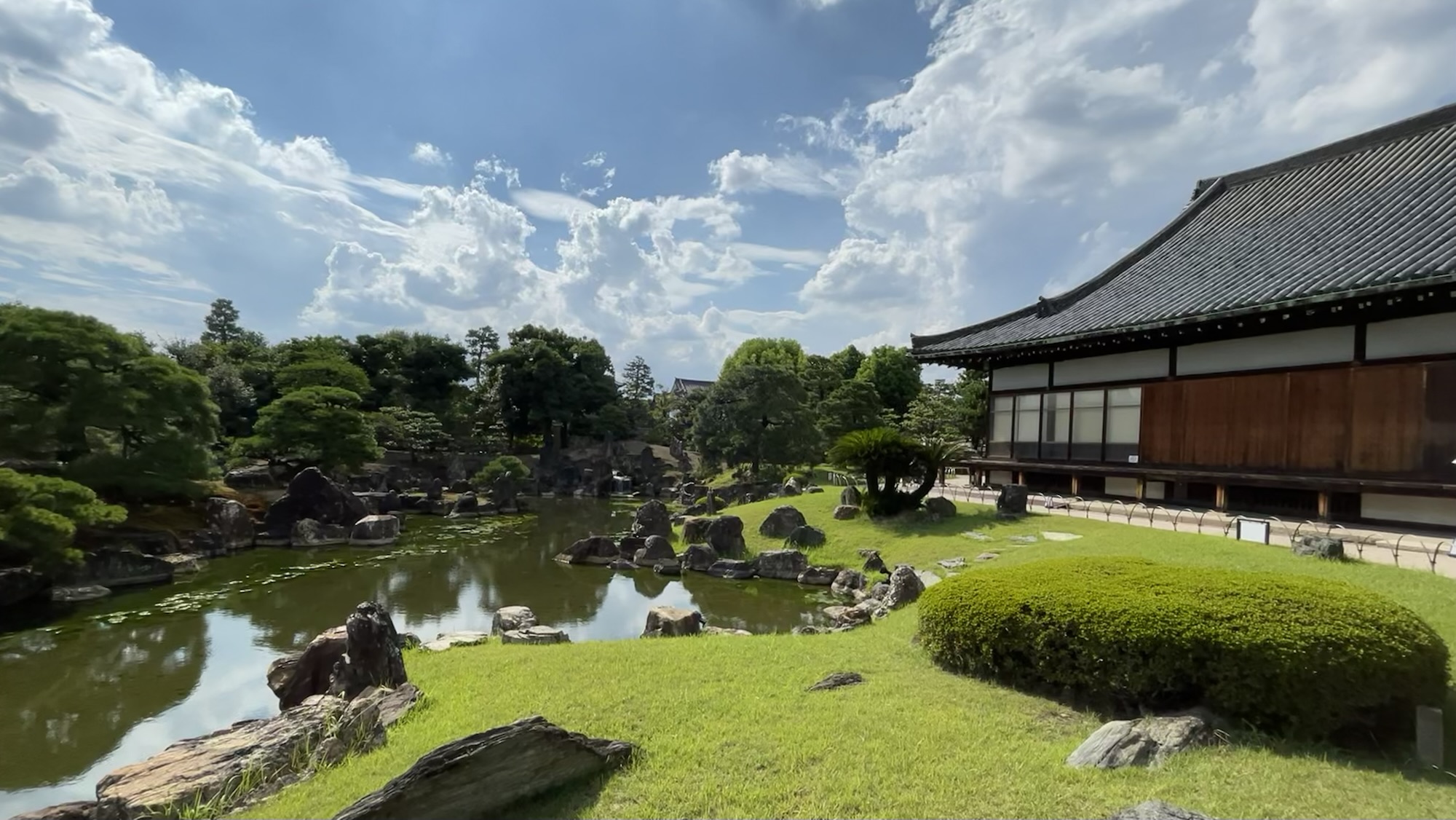
- Nijo-jo Castle. This is definitely a must see in Kyoto. The castle is beautiful and very interesting, but the gardens are just amazing – see the blog post title picture.
- Gion Corner. Here you can watch traditional acts and dances in the evening and enjoy the atmosphere in the atmosphere at night in the historic Gion corner.

Day 10 to 13: Ohara village

The next stop on this Japan itinerary is again more relaxed. Ohara village is a hidden beauty in the Japanese nature. It is great to cool off a bit from the hot summer temperatures in the city. You can reach it easily by bus from Kyoto or you rent a car to drive there. Ohara is a good base for day trips in the area. I already wrote about them in my blog post Exploring Ohara.
Day 10: Jakko-in & Sanzen-in
Explore Ohara with the Jakko-in and the Sanzen-in temples. Relax in an onsen & have a traditional dinner.
Day 11: Kurama & Kifune
Hike from Kurama to Kifune. Aftwards, relax in an onsen & have a traditional dinner.
Day 12: Hiei-san
Visit the Hiei-san. Aftwards, relax in an onsen & have a traditional dinner.
Day 13: Lake Biwa
Visit the Biwa lake or if you have a rental car visit Miyama’s thatched rooftop village which has its own travel guide.

Day 14 to 15: Osaka

Nobody misses out on Osaka on their first Japan itinerary. In my opinion you don’t have to spend too much time there. It has a big name, but it is just a big city, nothing compared to Tokyo or Kyoto. It has some sights and is a good base for day trips though. This is probably why it is the number one trending travel destination on trip advisor in 2025. The people and the atmosphere definitely are very nice. It is just as everywhere else in Japan, clean, well organized and with great hospitality.
Day 14: Osaka Castle, Dotonbori & Universal Studios Japan
Visit Osaka Castle & at night the neon-lights of Dotonbori. We actually went to the Universal Studios Park after Osaka Castle, because we had free tickets. Usually, you should plan in a full day for that.
Day 15: Nara
Day trip to Nara. We skipped it this time, because we went to the Expo 2025. However, Nara is definitely a must day trip from Osaka, 40 minutes by train. There is the Todaiji temple with the giant Buddha statue and beautiful buildings and gardens with a wonderful atmosphere especially at night when it is lit by many torches. What nobody wants to miss is the Nara park close by with lots of Japanese Sika deers.

Day 16 to 22: Okinawa

The last destination of our Japan summer itinerary was Okinawa where we spent 6 more days. If possible we would have loved to stay there for at least two weeks. We just wanted to top off the journey with a different kind of Japan and some family beach days for recovery after lots of sight-seeing. Okinawa can be reached via a domestic flight from Osaka in 2 hours and then you are in this tropical paradise. But Okinawa has a lot more to offer than beautiful beaches – it is also really unique culturally.

You can spend your days just at the beach or shopping in the American village. There are plenty of different beaches to visit or islands to explore that can be reached by ferries. See my post on From Osaka to Okinawa.
For this trip we obviously booked a round trip as we flew to Tokyo and flew back from Naha on Okinawa. When found a good connection which was not more expensive than flying back from Tokyo using skyscanner.
If you want to know more about any of the destinations or need some guidance, leave a comment below.
Arigato gozaimasu for reading。
© 2025 Reuter Services. All images on this website are protected by copyright. Unauthorized use, reproduction, or distribution is prohibited without my prior written permission.
Leave a Reply